

The Right Beginning Changes Everything
Every new student who walks through our doors carries a quiet question.
Do I belong here?
Some children arrive visibly confident. Others step in cautiously. Most stand somewhere in between. Regardless of personality, every child entering something new is measuring the same thing. Is this a place where I can try without feeling exposed? Is this a place where mistakes are part of learning rather than proof that I do not belong?
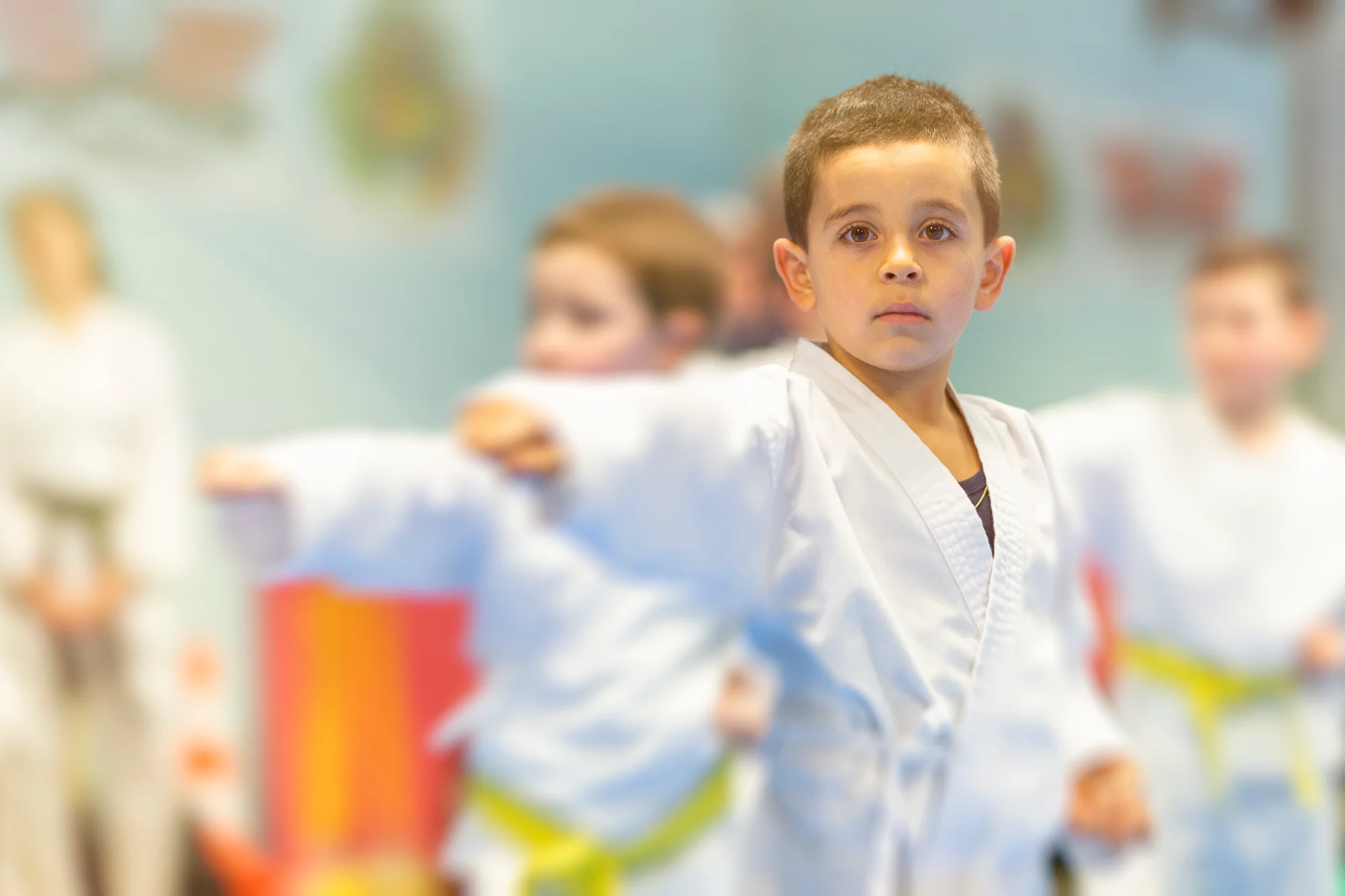
For more than three decades, families have chosen Karate West because we understand how vulnerable beginnings can feel. Whether a child is starting Little Dragons karate in Issaquah or joining our youth karate classes for kids in Issaquah for the first time, those early weeks shape everything that follows.
Beginning requires courage. A new uniform. Unfamiliar terminology. Older students who appear more advanced. Even confident children feel the weight of being new. If that moment is rushed or mishandled, hesitation deepens quietly. When it is handled well, engagement grows.
Effort cannot be demanded before it feels safe to offer.
At Karate West, the first months are intentional. We understand that how a child feels at the beginning determines whether they lean forward or quietly withdraw. Skills are introduced in manageable steps. Students are shown clearly what to do and then given space to practice without being hurried. Corrections are specific and calm. Repetition is expected. Progress is visible.
Children are not placed on display before they are ready. They are coached forward.
Parents sometimes tell us their child is shy. Others share that their child gives up quickly when something feels difficult. We do not see these as permanent traits. We see them as signals.
A hesitant child is often protecting themselves. A child who stops trying may not yet trust that effort will lead somewhere worthwhile.
Our responsibility is to build that trust from the first class.
After nearly four decades of working with children, I began to see that what determines long term growth is not personality. It is experience. The students who developed lasting confidence were not always the most outgoing. They were the ones who learned that difficulty did not mean exclusion. I write about this in PE With a Purpose, where I describe how emotional safety creates the conditions for meaningful effort.
Children do not grow when struggle is removed entirely. But they also do not grow when struggle feels overwhelming or humiliating. Growth happens in what I call supported struggle. This is the space where a child attempts something challenging, receives calm guidance, and is invited to try again without shame.
Supported struggle communicates something powerful: you are allowed to be new here.
Inside the dojo, hesitation is met with structure rather than spotlight. A student attempts a movement. It feels uncertain. They receive correction. They try again. Gradually, improvement appears. The environment teaches them that early awkwardness is not failure. It is part of learning.
When children feel secure enough to try, participation replaces hesitation.
That shift changes the trajectory.
Confidence in children is not loud. It is not bravado. It is not personality driven. It is the quiet belief that “I can try something difficult and improve.”
That belief influences behavior in every environment.
A confident child raises a hand even when unsure. They try out for something new. They attempt the harder math problem. They enter a group rather than standing on the edge. They recover more quickly from embarrassment. They hear correction as guidance instead of criticism.
Confidence gives children the courage to engage.
Engagement is what unlocks opportunity. If a child never steps forward, never attempts the new activity, never volunteers, potential remains unused. Intelligence alone does not create growth. Participation does. Confidence is the gateway to participation.
When confidence is underdeveloped, children often protect themselves by withdrawing. They avoid situations where they might appear behind. They stay quiet rather than risk being wrong. They choose what feels safe instead of what stretches them. Over time, that pattern limits exposure, and limited exposure limits growth.
This is why early confidence matters so deeply.
The earlier children build earned self belief, the more stable that foundation becomes. A child who learns at six or seven that trying leads to progress begins to see themselves as someone who can grow. That identity shapes future decisions.
Structured skill based classes like karate provide repeated opportunities to build that belief. Students attempt movements that feel awkward at first. They receive guidance. They repeat. They improve. The progress is visible. The evidence is personal.
Confidence built on lived experience is durable.
It does not depend on applause. It does not disappear after one mistake. It rests on memory. “I have done hard things before. I can do this too.”
Our culture reinforces that foundation. Senior students model effort and composure. Instructors know each child by name. Expectations remain consistent from class to class. When children walk into the dojo, they know what to expect. Predictability reduces anxiety. Reduced anxiety increases engagement.
Families often notice growth beyond the mat. A child becomes more willing to participate at school. Frustration lasts a shorter time. Feedback is received with less defensiveness. The ability to stay engaged during something difficult strengthens.
This is why families searching for family martial arts in Issaquah stay long term. They are not simply enrolling in an activity. They are investing in a developmental process.
When a child first joins our karate for beginners program in Issaquah, they may doubt themselves. They may compare themselves to others. Our role is not to eliminate those feelings but to guide them through the process without allowing those feelings to define them.
As students advance, the same principle continues. Each new belt introduces skills that feel uncertain at first. The student who once hesitated now recognizes the pattern. Initial discomfort is followed by repetition. Repetition produces refinement. Refinement builds belief.
Confidence grows through experience and proof.
Karate West has endured because we have never rushed students past the stage of learning how to try. We have never built our culture on comparison or pressure. We have focused on creating a place where effort is supported, structured, and meaningful.
The first lesson is never just about technique. It is about engagement.
It is about helping a child move from hesitation to participation.
When that shift happens early, students remain invested. And when they remain invested, growth follows.