

When Competition Comes Before Foundation
Over the past four decades of working with children, I have noticed a pattern.
Children do not struggle because they are incapable.
They struggle when the environment asks more of them than they are developmentally ready to give.
One of the most common places this happens is in early competitive sports.
Competition itself is not the problem. Competition can sharpen focus, encourage teamwork, and build composure. The issue is timing.
When competition becomes central before a child has built physical coordination, emotional steadiness, and confidence through repetition, the experience can shift from growth to pressure.
Pressure changes how children learn.
In many youth sports environments today, evaluation arrives early. Games matter quickly. Rankings appear sooner than they used to. Adults track performance closely. The scoreboard becomes the center of attention.
For some children, this is motivating.
For many, it is destabilizing.
Children who are still learning how their bodies move are suddenly measured publicly. Mistakes feel costly. Hesitation grows. The child who once enjoyed running or throwing begins to associate movement with anxiety.
This is not weakness. It is developmental reality.
What the Research Is Telling Us
Major pediatric and sports medicine organizations have been consistent on this point.
The American Academy of Pediatrics has warned about early sport specialization and year-round competitive training contributing to overuse injuries, emotional burnout, and decreased long-term participation. Their guidance emphasizes rest, recovery, and developmental balance.
The International Olympic Committee has highlighted long-term athletic development models that prioritize foundational movement skills before intensive competition.
Perhaps most telling, multiple consensus statements in sports medicine research conclude that early specialization is not required for elite success. Children do not need to be pushed into high-pressure competitive tracks at young ages to thrive later.
This is not an argument against sport.
It is an argument for sequence.
Children need foundation before pressure.
What Happens When Competition Comes Too Early
When children are placed in high-pressure environments before they have internalized how effort leads to progress, predictable patterns emerge.
They begin protecting themselves from mistakes. Instead of experimenting with movement, they play cautiously. They avoid risk, and learning slows.
They tie identity to performance. Winning feels like validation. Losing feels personal.
Some disengage entirely. The child who once loved movement begins saying, “I don’t want to go.”
Children do not dislike challenge. They resist environments that feel threatening before they feel capable.
They need repetition before evaluation. Correction before comparison. Visible progress before public measurement.
Without those elements, competition can distort development rather than strengthen it.
What Structured Martial Arts Does Differently
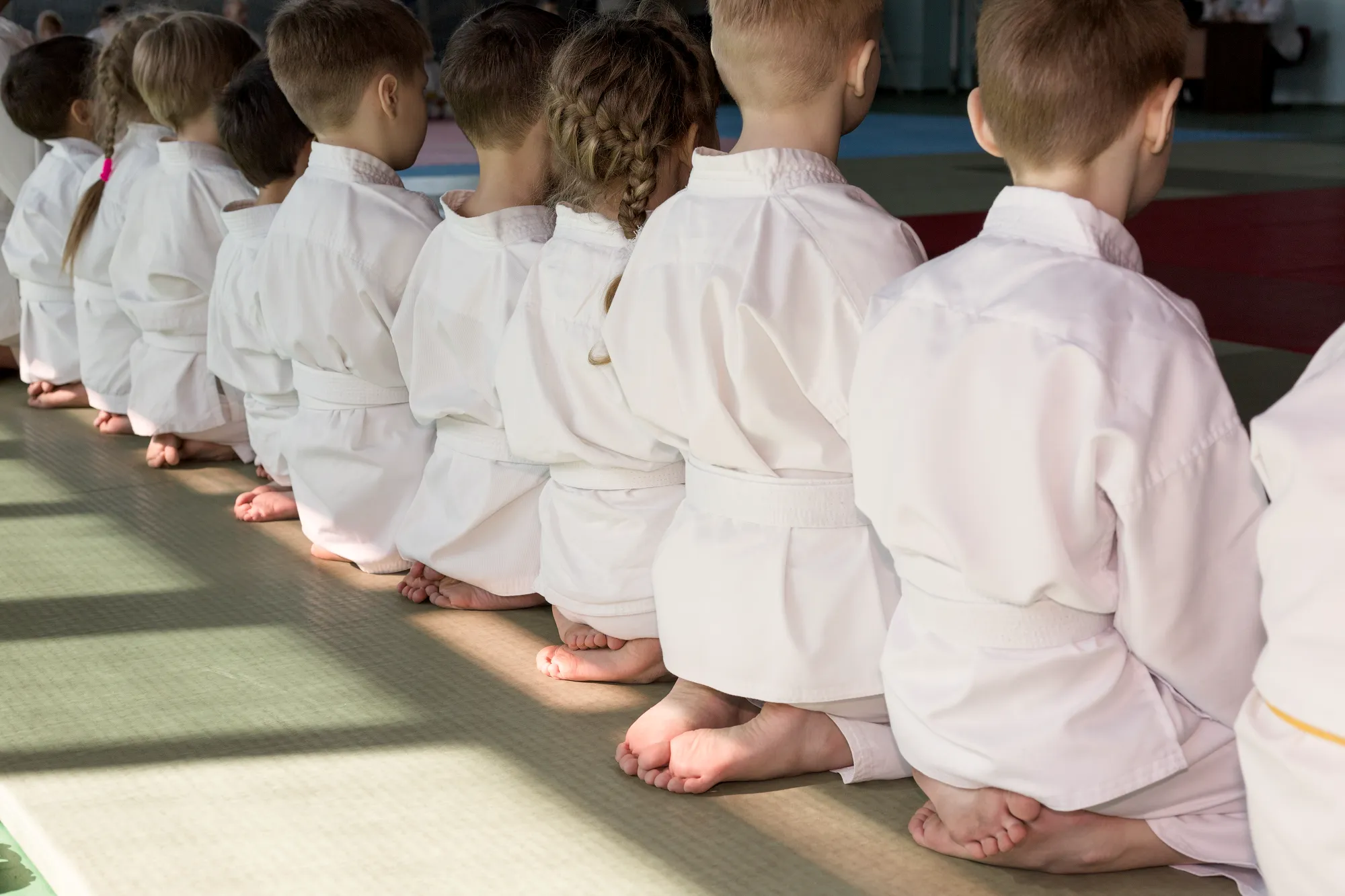
At Karate West, development follows a different order.
A child learns a movement in pieces. They repeat it. They receive calm correction. They adjust. They repeat again. Improvement becomes visible. Effort leads somewhere tangible.
Skill remains the focus, not the scoreboard.
When children experience this sequence consistently, they interpret difficulty differently. Awkward beginnings do not feel like verdicts. They feel like stages.
Over time, this builds durable confidence. Not confidence based on winning, but confidence grounded in earned progress.
Advancement reflects consistency. A new belt is not awarded for a single performance. It represents weeks and months of steady effort. Children experience directly that effort produces change, and that pattern shapes how they approach every new challenge.
Why This Matters for Parents
Many parents are navigating sports decisions without a developmental roadmap. They want their child to be active, social, and confident. It is easy to assume that more competition equals more growth.
But growth is not driven by pressure.
It is driven by structured repetition in an emotionally steady environment.
If your child thrives in competition, that is wonderful. If they do not, that does not mean they lack toughness. It may mean they need a stronger foundation first.
The deeper question is not whether children should ever compete. It is whether they have learned how to stay steady under challenge before they are measured publicly.
That steadiness must be built intentionally.
The Long View
When children internalize that effort leads to improvement, something shifts.
They approach new challenges with less fear. They recover more quickly from mistakes. They stay engaged longer.
This carries far beyond athletics. It shows up in academics, relationships, and eventually in professional life.
Early competition can either reinforce this development or interrupt it. When introduced at the right time, it refines character. When introduced too early, it can create fragility.
In PE With a Purpose, I describe learning as a repeatable sequence: attempt, adjustment, repetition, progress. When that sequence is protected, children grow steadily. When it is disrupted by premature pressure, many disengage before discovering what they are capable of.
This philosophy guides both in-person training at Karate West and my live online program, Great Start Karate. In both settings, development follows the same order. Children build coordination, focus, and visible progress before they are evaluated or compared. Repetition builds stability. Stability builds confidence. Confidence makes challenge possible.
Karate, when structured intentionally, protects that sequence.
It gives children a place to build coordination, focus, and resilience before they are tested against others. It allows them to develop confidence that does not depend on comparison.
And when competition does come later in life, they are prepared for it.
Because they trust effort.
That trust is what allows children not just to perform, but to grow.