

The Quiet Strength of Courtesy
When we tell families that courtesy is one of our life skills this month, many picture polite words and respectful greetings. Those habits matter, and we reinforce them consistently. But in our dojo, courtesy is not simply about saying the right thing. It is about learning how to move through the world with awareness of other people.
It begins before a single technique is practiced.
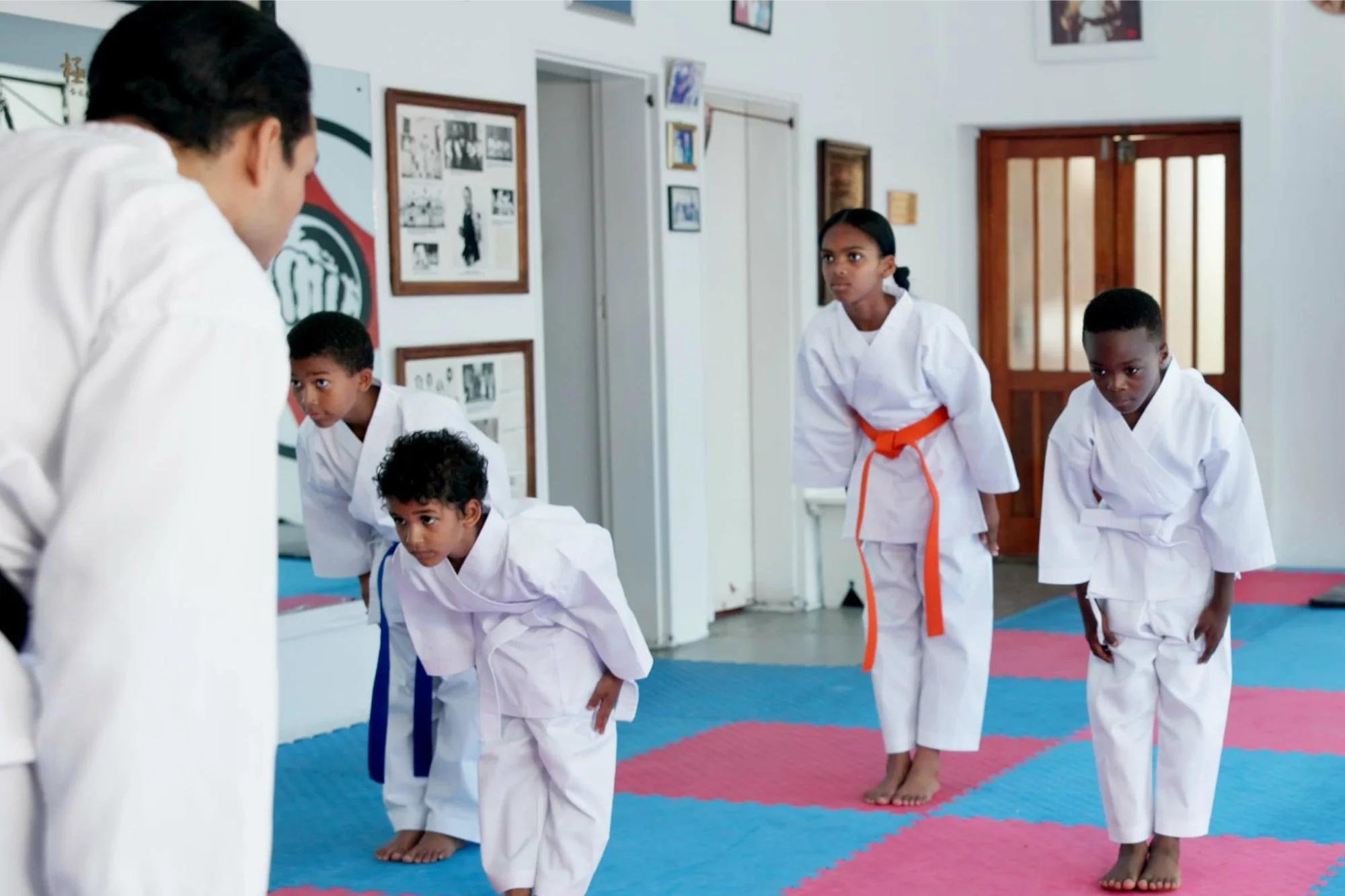
Every class opens with a bow. To someone observing for the first time, it may look ceremonial. In reality, it is instructional. The bow creates a pause. It marks the mat as a shared space. It reminds each student that training is not casual and that the people standing beside them deserve consideration.
That small act interrupts impulse and replaces it with intention.
Children do not naturally pause. They move quickly. They speak quickly. They react quickly. Courtesy teaches them to slow that reaction just enough to notice the people around them. Over time, that awareness becomes visible in quiet ways.
A student who once rushed into line begins to step back and allow space. A child who interrupted begins to wait until someone finishes speaking. A partner who once focused only on their own performance begins to acknowledge the effort of the person across from them.
These changes are not dramatic. They are steady. And steady change is what builds character.
Courtesy, practiced repeatedly, becomes a form of regulation training. Many of the challenges children face socially are not about intent. They are about impulse. They speak before listening. They react before thinking. They compete before understanding. In karate, we build a rhythm that counters that impulse.
Students practice what we call “eyes and ears.” When someone is speaking, attention follows. Not because it is demanded harshly, but because it is expected consistently. Listening becomes an action, not a passive state. Over time, children learn that being heard and offering attention are connected.
This awareness strengthens relationships inside the dojo.
Before sparring, students bow to one another. After sparring, they bow again. They are acknowledging that improvement happens in partnership. A strong round of training requires trust. When courtesy anchors that exchange, intensity remains controlled. Strength is directed, not careless.
Without courtesy, physical training can easily drift toward aggression or ego. With courtesy, it remains disciplined.
One of the most important elements of courtesy is how we handle interruption. Rather than correcting sharply every time a child speaks out of turn, we teach alternatives. A raised hand. A brief pause. A signal of readiness. These small tools give children a way to participate respectfully without feeling shut down.
It is not about silencing them. It is about helping them regulate themselves.
And regulation is a skill that transfers everywhere.
In classrooms, children who can wait their turn are easier to teach. On teams, children who can acknowledge others build trust more quickly. In families, children who can disagree respectfully reduce tension. Courtesy does not eliminate personality. It refines expression.
Over the years, I have watched children grow into this skill. The student who once burst into the room begins to enter with composure. The child who once reacted quickly during frustration begins to pause, take a breath, and respond more thoughtfully. No lecture creates that shift. Repetition does.
Courtesy is strengthened most during imperfect moments.
When a drill does not go well and a student feels frustration rising, the expectation is not silence. The expectation is control. We model it. We guide it. Sometimes we narrate it aloud. “Take a breath. Reset. Try again.” These are not just technical corrections. They are social ones. They teach that strong emotions do not excuse careless behavior.
In a culture that often rewards speed and volume, courtesy can feel understated. Yet it remains one of the clearest indicators of maturity. A child who knows how to greet an adult with steadiness, who can hold eye contact, who can listen without interrupting, carries a presence that communicates reliability.
Courtesy reduces friction. It makes cooperation smoother. It builds environments where learning can happen without unnecessary tension.
And importantly, courtesy does not diminish strength. In martial arts, we train powerful movements. We ask children to strike with precision and move with intensity. Courtesy ensures that power is guided by respect. It keeps training focused and purposeful.
Over time, the rituals of the dojo become internal habits. The bow feels natural. The pause before speaking becomes instinctive. The acknowledgment of a partner becomes automatic.
This is when courtesy has moved beyond instruction and into character.
Long after the details of a particular technique fade, the habit of entering spaces respectfully remains. The instinct to listen before reacting remains. The ability to disagree without disrespect remains.
That is why courtesy is not a small life skill.
It is foundational.
It shapes how children relate to authority, to peers, and eventually to the wider world. It creates steadiness inside relationships and discipline inside action.
And it is built slowly, deliberately, one bow at a time.