

Effort Matters: Why It Shapes Who Your Child Becomes
Effort is one of the most important capacities a child can develop, yet it is often misunderstood.
Many children quietly believe that effort only matters if it leads to immediate success. When something feels awkward, slow, or difficult, they interpret that discomfort as evidence that they are not good at it. If improvement does not happen quickly, withdrawal begins. Over time, that belief shapes how they approach school, sports, friendships, and future challenges.
At Karate West, we see this pattern frequently in new students. A child steps onto the mat, watches others move with confidence, and feels the discomfort of being behind. In that moment, effort feels risky. Trying means possibly failing. Trying means being seen.
What determines whether a child leans in or pulls back is rarely talent. It is whether they believe effort leads somewhere meaningful.
When children believe effort produces growth, they stay engaged.
When they believe effort exposes weakness, they hesitate. That interpretation is shaped early, and it is shaped by environment.
Effort Is Not About Intensity
Parents sometimes equate effort with pushing harder or demanding more. In reality, effort is about sustained engagement. It is the willingness to remain with a task long enough for learning to occur. It is repeating a movement even when it feels unnatural. It is listening to correction and applying it rather than shutting down.
In our karate classes, effort is woven into every lesson. Students bow in, focus their attention, and practice the same technique repeatedly. The repetition is not designed for excitement. It is designed for development.
Progress follows practice.
When children consistently experience that repetition leads to improvement, frustration begins to shift. Difficulty no longer signals inability. It signals opportunity.
Why Effort Feels Uncomfortable
Effort requires uncertainty. It requires trying when the outcome is not guaranteed. For children who care about doing things well, this can feel vulnerable.
In many environments, speed and correctness are rewarded above all else. When being quick or being right becomes the standard, mistakes feel costly. A misstep becomes something to avoid rather than something to work through.
Inside the dojo, we intentionally slow that down.
Students are expected to attempt before they are perfect. They are coached through mistakes calmly. They are given space to adjust and try again. Effort is normalized. No one is surprised when a first attempt looks awkward because first attempts are part of learning.
Over time, students begin to internalize a consistent sequence: attempt, refine, improve.
That sequence becomes more than a training method. It becomes a mindset.
After nearly four decades of working with children, I began to recognize a pattern that extended far beyond martial arts. The students who grew the most were not always the most naturally gifted. They were the ones who learned how to remain engaged when something felt difficult. That realization eventually led me to write about what I had observed in PE With a Purpose, where I outline the deeper learning patterns that shape long-term growth.
One of the most important ideas in that work is what I call supported struggle.
Children do not grow when struggle is removed. But they also do not grow when struggle is overwhelming or isolating. Growth happens when difficulty is paired with steady guidance. When a child attempts something challenging, receives calm correction, and is given the opportunity to try again without shame, the experience becomes constructive rather than discouraging.
Unsupported struggle feels like failure. Supported struggle feels like progress in motion.
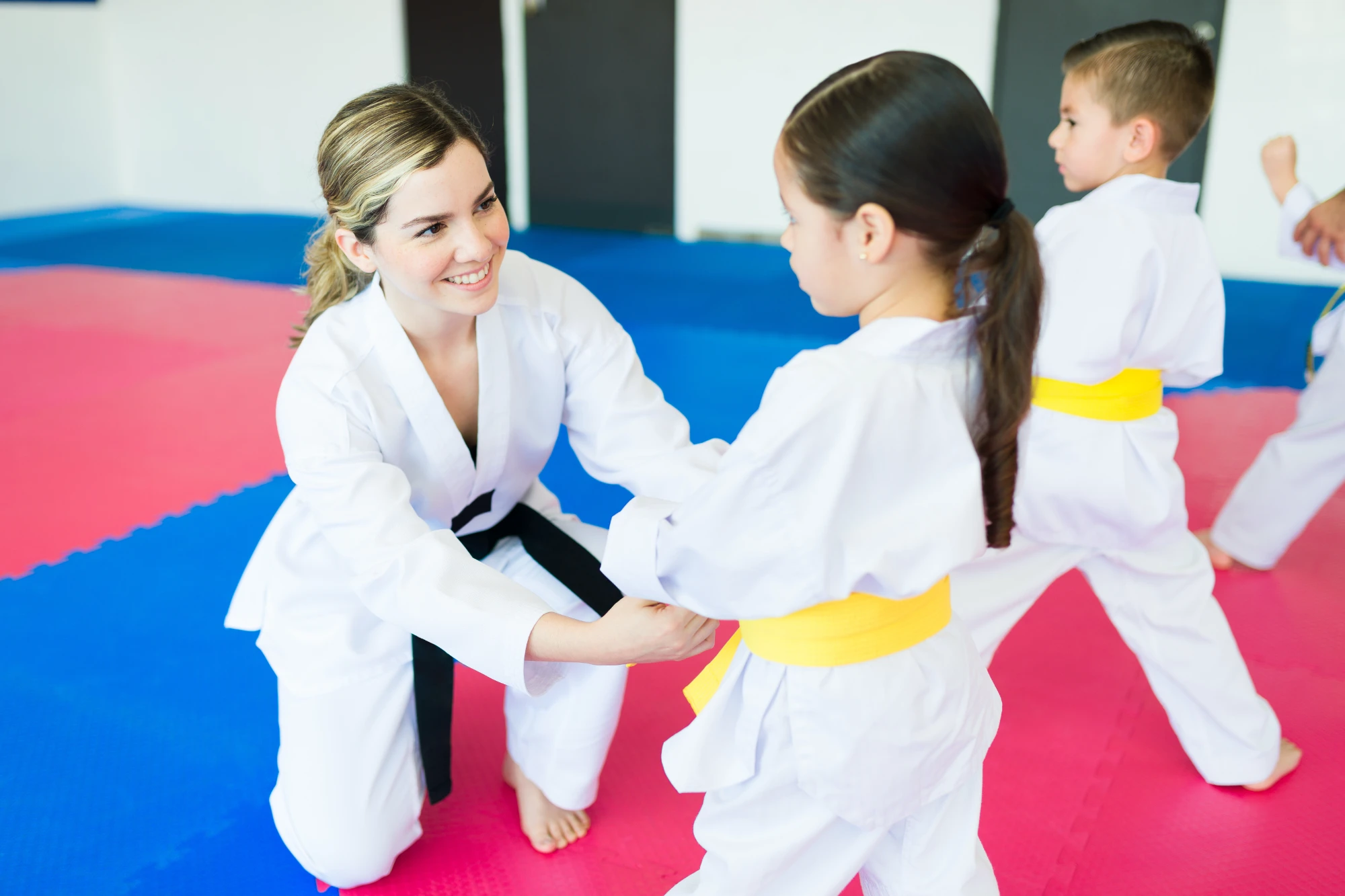
Inside the dojo, effort is never demanded in isolation. Students are guided through it. They are corrected without being diminished. They are expected to try again, but they are not left alone in the trying. Over time, they begin to associate difficulty with growth rather than inadequacy.
That shift transforms effort from something threatening into something strengthening.
When children internalize supported struggle, they stop interpreting effort as proof that they are behind. Instead, they recognize it as part of becoming better. That understanding allows them to stay engaged long enough for improvement to appear.
The Long-Term Impact of Effort
Effort builds more than physical skill. It builds resilience.
A child who understands supported struggle does not panic when something feels hard. They have experienced the cycle enough times to know that discomfort is temporary. They trust that guided repetition produces refinement because they have lived it.
This is why karate families often notice changes beyond the mat. A child becomes more willing to attempt a challenging homework assignment. They recover more quickly from frustration. They are less likely to abandon something simply because it feels unfamiliar.
Effort creates stability. It teaches children that growth is not accidental. It is something they can influence.
That lesson carries into academics, friendships, and future goals.
Effort and Belt Progression
Belt progression offers a clear demonstration of effort sustained over time.
At Karate West, advancement is not based on a single strong performance. It reflects steady training. Students who move from white belt through higher ranks do so because they practiced consistently. Each belt represents hours of focused repetition, corrections applied, and skills refined. It represents choosing to remain engaged when quitting would have been easier.
Even our youngest students in the Little Dragons program in Issaquah begin to absorb this lesson. They experience firsthand that listening carefully and trying again leads to visible improvement. They learn that progress is earned through engagement rather than natural ability alone.
Belts do not reward perfection. They recognize persistence.
Confidence Built on Effort Lasts
Confidence built solely on praise is fragile. Confidence built on lived experience is durable.
When a child has felt the discomfort of learning something new and worked through it successfully, they carry that proof forward. They begin to believe they can handle difficulty because they have done so before.
Effort is rarely loud. It is steady. It is consistent. Over time, it shapes identity.
Children who learn to apply effort early become less dependent on external validation and more grounded in their own ability to improve. They begin to approach challenge with curiosity rather than avoidance.
At Karate West, we do not simply teach techniques. We teach students how to remain with something long enough to master it, supported in the struggle rather than shielded from it.
That lesson may be one of the most important skills they ever carry into adulthood.